Spaced repetition and active recall: how to study so it sticks
Spaced repetition and active recall explained: the research, a sample review schedule, flashcards, the Leitner system and a one-week plan you can start today.

Key takeaways
- Active recall means pulling information out of memory, such as answering a question with your notes closed, instead of rereading it.
- Spaced repetition means reviewing the same material over several sessions with gaps between them, rather than cramming it into one session.
- In a classic experiment, students who practiced recalling a text remembered more a week later than students who reread it, even though rereading made them feel more confident.
- A major review rated practice testing and distributed practice as high-utility study techniques, and rated highlighting, rereading and summarization as low utility.
- A simple schedule is to review one day after learning, then after about three days, a week and two weeks, testing yourself each time.
Spaced repetition and active recall are two study habits that work best together: active recall means testing yourself by retrieving information from memory, and spaced repetition means doing those self-tests over several sessions with gaps between them. Research consistently rates both above rereading and highlighting for long-term retention.
What are spaced repetition and active recall?
Active recall is the practice of retrieving information from memory, for example by answering a question with your notes closed, while spaced repetition is the practice of revisiting the same material across several sessions separated by time. Researchers usually call these retrieval practice (or practice testing) and distributed practice.
They answer two different questions:
- How should I study? By retrieving: flashcards, practice questions, writing out what you remember, explaining a topic from memory.
- When should I study? In spaced sessions: a little today, again in a few days, again next week, rather than all at once.
Combined, they give a simple rule: test yourself, then test yourself again later.
What is the forgetting curve?
The forgetting curve describes how memory for newly learned material drops quickly at first and then more slowly over time. It comes from Hermann Ebbinghaus, who published the first systematic experiments on memory in 1885 [1].
Ebbinghaus memorized lists of nonsense syllables and later relearned them, measuring how much time the relearning saved compared with the first attempt. In his data, the saving fell to about a third after one day and to roughly a fifth after a month: most of the loss happened early, then the decline slowed [1]. Murre and Dros replicated the experiment in 2015 with a single participant who spent 70 hours learning and relearning lists, and obtained results similar to the original [2].
Data: Ebbinghaus (1885), “savings” when relearning lists of nonsense syllables. Most forgetting happens in the first day; what survives fades slowly.
Show the data as a table
| Time since learning | Savings |
|---|---|
| 20 minutes | 58.2% |
| 1 hour | 44.2% |
| 9 hours | 35.8% |
| 1 day | 33.7% |
| 2 days | 27.8% |
| 6 days | 25.4% |
| 31 days | 21.1% |
Two caveats matter. Both studies used meaningless syllables and a single learner, so the exact numbers do not transfer to a biology chapter. And “savings” is not the same as being able to recall something on a test. The useful lesson is the shape: without review, a lot fades in the first day or two, which is why the first review should come soon.
Does active recall actually work?
Yes. Retrieval practice is one of the best-supported findings in the psychology of learning: taking a test on material tends to improve long-term retention more than spending the same time restudying it.
In a widely cited experiment, Roediger and Karpicke had students study short prose passages and then either restudy them or take recall tests without feedback [3]. On a final test five minutes later, restudying came out ahead. On final tests two days or one week later, the students who had practiced recall remembered substantially more. Restudying also made students more confident about how much they would remember, even though it led to worse delayed performance.
A follow-up study with foreign-language vocabulary pushed the point further. Once students could produce a word correctly, continuing to restudy it had no effect on delayed recall, while continuing to test it produced a large benefit. Students’ predictions of their own performance were unrelated to how they actually did [4].
Why rereading feels better than it is
Rereading makes material feel familiar, and familiarity is easy to mistake for knowing it. Recall is harder and you will notice gaps, which feels worse in the moment but is exactly the information you need. If self-testing feels slightly uncomfortable, it is probably working.
Why does spacing out study sessions help?
Spacing helps because reviewing material after some forgetting has begun produces more durable memory than repeating it while it is still fresh. This is called the spacing effect or distributed practice effect.
A meta-analysis by Cepeda and colleagues pulled together 839 assessments of distributed practice from 317 experiments in 184 articles on verbal recall [5]. Beyond confirming that spacing helps, it found that the best gap between study sessions depends on how long you need to remember the material: the longer the retention interval, the longer the best gap.
A later study of more than 1,350 people put rough numbers on that relationship [6]. For a test one week away, the best gap was about 20 to 40 percent of that week, roughly one to three days. For a test a year away, the best gap was about 5 to 10 percent of the year, roughly three to five weeks. Gaps that were too short or much too long both did worse.
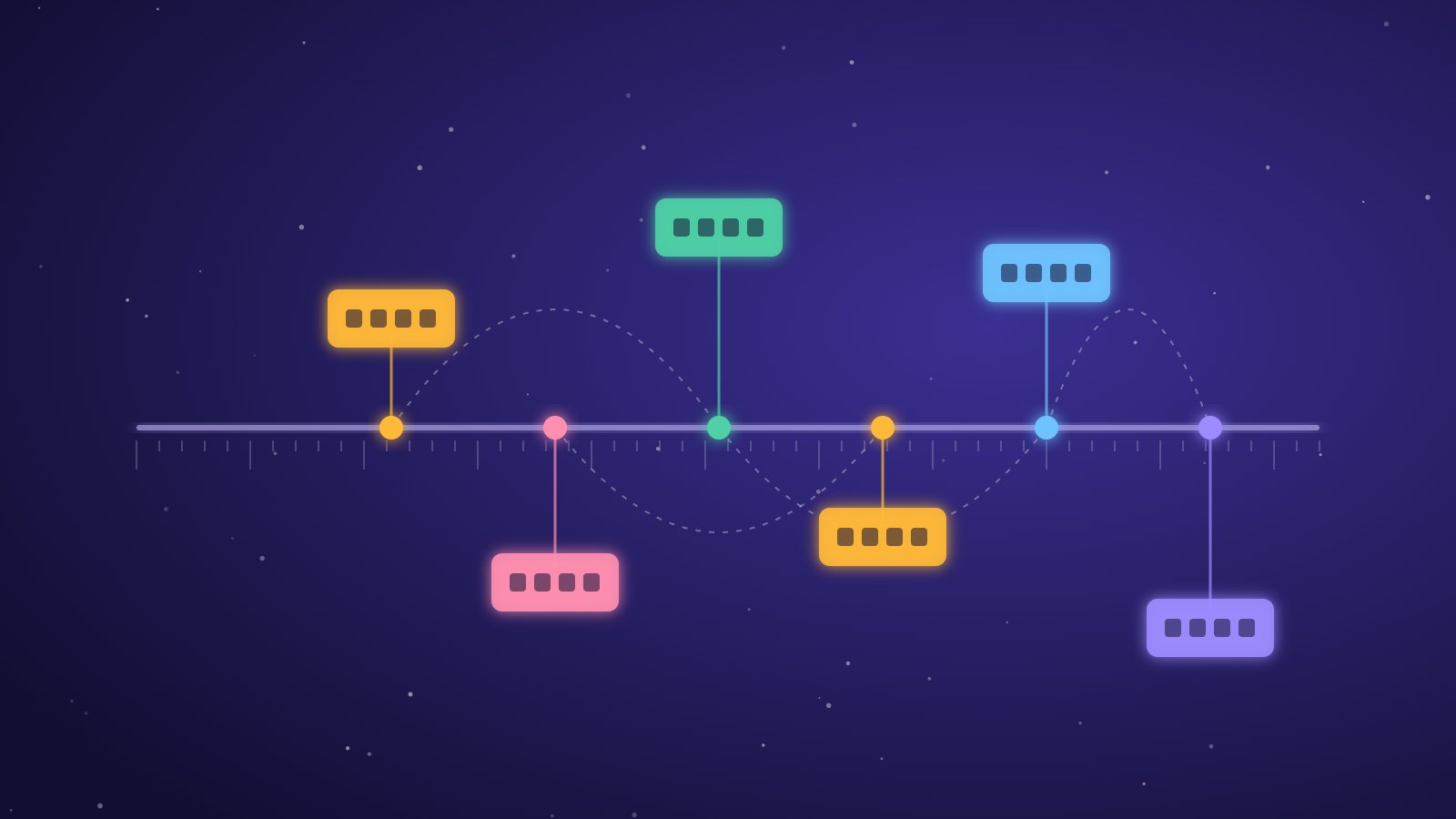
Illustrative schedule: each gap is longer than the last. Exact intervals matter less than reviewing again just as the memory starts to fade.
Which study techniques work best, according to research?
A major 2013 review by Dunlosky and colleagues rated practice testing and distributed practice as the two high-utility study techniques, and rated highlighting, rereading and summarization as low utility [7]. The authors judged techniques on whether their benefits held across different learners, materials, tasks and real educational settings.
Source: Dunlosky, Rawson, Marsh, Nathan & Willingham (2013), who reviewed the evidence for ten common techniques.
Show the data as a table
| Technique | Overall utility |
|---|---|
| Practice testing | High |
| Distributed practice | High |
| Elaborative interrogation | Moderate |
| Self-explanation | Moderate |
| Interleaved practice | Moderate |
| Summarization | Low |
| Highlighting / underlining | Low |
| Keyword mnemonic | Low |
| Imagery for text | Low |
| Rereading | Low |
- High utility: practice testing and distributed practice.
- Moderate utility: elaborative interrogation (asking why a fact is true), self-explanation and interleaved practice (mixing problem types).
- Low utility: summarization, highlighting or underlining, the keyword mnemonic, imagery for text learning and rereading.
“Low utility” does not mean useless. The review found that some of these help some students in some situations, but they do not consistently boost performance, and it suggests replacing, for example, rereading with practice testing [7]. Mnemonics still have a place for specific lists and sequences; our guide to mnemonic devices covers when they help.
What is a good spaced repetition schedule?
A good starting schedule is to review new material one day after learning it, then after about three days, one week, two weeks and one month, testing yourself each time. If you forget an item, shorten the next gap for that item; if it comes easily, lengthen it.
- Day 0: learn it and do one quick recall attempt at the end of the session.
- Day 1: first review, before much has faded.
- Day 3: second review.
- Day 7: third review.
- Day 14: fourth review.
- Day 30: fifth review, then occasionally after that.
This is a practical rule of thumb rather than a schedule the research prescribes. The evidence above supports two adjustments: if your exam is a week away, keep gaps to a day or two; if you need the material for months, let the later gaps grow to several weeks [6].
How do you use songs with spaced repetition and active recall?
Use a song as the thing you retrieve, not just the thing you listen to: sing or write out the lyrics from memory without the track, then play the song to check what you missed. Listening alone is closer to rereading; recalling first turns it into practice testing.
- Learn it. Listen with the lyrics visible and make sure you understand each line.
- Recall it cold. Next day, without playing anything, sing or write as much as you can. Then answer two or three content questions, such as “Which group of the periodic table is least reactive, and why?”
- Check and fix. Play the track and mark what you missed or got wrong.
- Space it. Repeat the cold recall on day 3, day 7 and day 14.
Lyrics are a cue, not the whole topic, so always add a question that requires understanding. Songs for this include the periodic table groups song, the mitosis song, the electromagnetic spectrum song and the planets song. BrainBeats songs show synced lyrics, which makes the check step quick. For the evidence on music and memory itself, see Does music help you learn?, and for a worked example, how to memorize the periodic table.
What tools help with spaced repetition?
The simplest tools are paper flashcards sorted into boxes (the Leitner system) or a flashcard app that schedules reviews for you. The tool matters less than the habit: answer before you look, and come back later.
Flashcards that actually test you
- Put a question on the front, not a topic heading. “What does the mitochondrion do?” beats “Mitochondria.”
- Keep one idea per card.
- Say or write the answer before flipping. Peeking turns recall into recognition.
- Include “why” and “how” cards, not just definitions.
The Leitner system
The Leitner system, described by Sebastian Leitner in his 1972 book So lernt man lernen, schedules flashcards using a set of boxes. Leitner’s original box worked a little differently, but a common modern version uses five boxes:
- Box 1: review every day.
- Box 2: every two days.
- Box 3: twice a week.
- Box 4: once a week.
- Box 5: every two weeks.
Every card starts in Box 1. If you answer correctly, it moves up a box; if you get it wrong, it goes back to Box 1. Cards you know drift toward rare reviews, and hard cards keep coming back. Apps automate the same idea with adaptive intervals.
What are the most common spaced repetition mistakes?
The most common mistake is reviewing by rereading instead of testing yourself, which feels productive but gives weaker long-term results [3]. Others to watch for:
- Cramming the night before. Massed study can feel effective because you test well right afterward, but spaced study leads to better retention later [5].
- Waiting too long for the first review. The steepest forgetting is early, so review within a day.
- Skipping feedback. After recalling, check the answer, or you may rehearse a mistake.
- Making cards too big. A card with five facts is hard to grade honestly.
- Memorizing without understanding. Add questions that ask why or how.
- Letting the deck pile up. Ten minutes a day beats an hour once a week.
- Trusting your sense of how well you know it. Confidence is a poor guide [4]; your quiz results are a better one.
What does a one-week study plan look like?
A one-week plan introduces new material early, reviews it within a day, and mixes older topics back in so every topic is retrieved several times before the end of the week. Each session is about 25 to 30 minutes.
| Day | New material | Review (test yourself first) | Recall activity |
|---|---|---|---|
| Monday | Topic A | None | End-of-session brain dump: write everything you remember about A |
| Tuesday | Topic B | A | Flashcards for A; brain dump for B |
| Wednesday | Topic C | B | Practice questions on B; sing or write a song from memory, then check |
| Thursday | None | A, C | Mixed flashcards; explain A aloud without notes |
| Friday | Topic D | B | Practice questions on B; brain dump for D |
| Saturday | None | C, D | Mixed questions on C and D |
| Sunday | None | A, B, C, D | Short mixed self-test; note weak spots for next week |
Next week, carry topic A into a review around day 14 and move the weak spots from Sunday’s test to the front of the queue.
Songs mentioned in this article
-
Noble Gases Don’t Call Back Groups of the periodic tablePop Chemistry Ages 12–16
-
Split, Then Split Again MitosisHip-hop Biology Ages 13–16
-
Radio to Gamma The electromagnetic spectrumRock Physics Ages 11–14
-
Eight Around the Sun The planets of the solar systemIndie Astronomy Ages 7–12
Frequently asked questions
What is the difference between spaced repetition and active recall?
Active recall is how you study: retrieving information from memory, for example with flashcards or practice questions. Spaced repetition is when you study: revisiting that material over several sessions separated by gaps. They work best together.
How many times should you review something to remember it?
There is no fixed number, but a common approach is four or five spaced reviews, for example after one day, three days, a week, two weeks and a month. Shorten the gap for items you forget and lengthen it for items you recall easily.
Is rereading notes a good way to study?
Rereading is one of the least effective common techniques; a major review rated it low utility. Closing your notes and testing yourself on the same material usually leads to better long-term retention.
Is it better to cram or space out studying?
Spacing is better for remembering material beyond the next few minutes or hours. Cramming can help on a test taken right away, but studies find spaced practice leads to better retention days and weeks later.
What is the Leitner system?
The Leitner system is a way to schedule flashcards using several boxes reviewed at increasing intervals. Cards you answer correctly move to a less frequently reviewed box, and cards you miss go back to the first box.
Sources
- Ebbinghaus, H. (1913). Memory: A contribution to experimental psychology (H. A. Ruger & C. E. Bussenius, Trans.). Teachers College, Columbia University. (Original work published 1885) psychclassics.yorku.ca/Ebbinghaus/index.htm
- Murre, J. M. J., & Dros, J. (2015). Replication and analysis of Ebbinghaus’ forgetting curve. PLOS ONE, 10(7), e0120644. doi.org/10.1371/journal.pone.0120644
- Roediger, H. L., & Karpicke, J. D. (2006). Test-enhanced learning: Taking memory tests improves long-term retention. Psychological Science, 17(3), 249–255. doi.org/10.1111/j.1467-9280.2006.01693.x
- Karpicke, J. D., & Roediger, H. L. (2008). The critical importance of retrieval for learning. Science, 319(5865), 966–968. doi.org/10.1126/science.1152408
- Cepeda, N. J., Pashler, H., Vul, E., Wixted, J. T., & Rohrer, D. (2006). Distributed practice in verbal recall tasks: A review and quantitative synthesis. Psychological Bulletin, 132(3), 354–380. doi.org/10.1037/0033-2909.132.3.354
- Cepeda, N. J., Vul, E., Rohrer, D., Wixted, J. T., & Pashler, H. (2008). Spacing effects in learning: A temporal ridgeline of optimal retention. Psychological Science, 19(11), 1095–1102. doi.org/10.1111/j.1467-9280.2008.02209.x
- Dunlosky, J., Rawson, K. A., Marsh, E. J., Nathan, M. J., & Willingham, D. T. (2013). Improving students’ learning with effective learning techniques: Promising directions from cognitive and educational psychology. Psychological Science in the Public Interest, 14(1), 4–58. doi.org/10.1177/1529100612453266
Keep reading
-

Ancient Greece and Rome: timeline, key facts and differences
Ancient Greece and Rome explained: a timeline from 776 BC to AD 1453, how the two differed, how Rome absorbed Greece, why the West fell and what they left us.
-
Best ways to memorize history dates: 8 methods that work
How to memorize history dates: learn a few anchor dates, attach events to a story, turn numbers into rhymes or pictures, then test yourself on a spaced schedule.