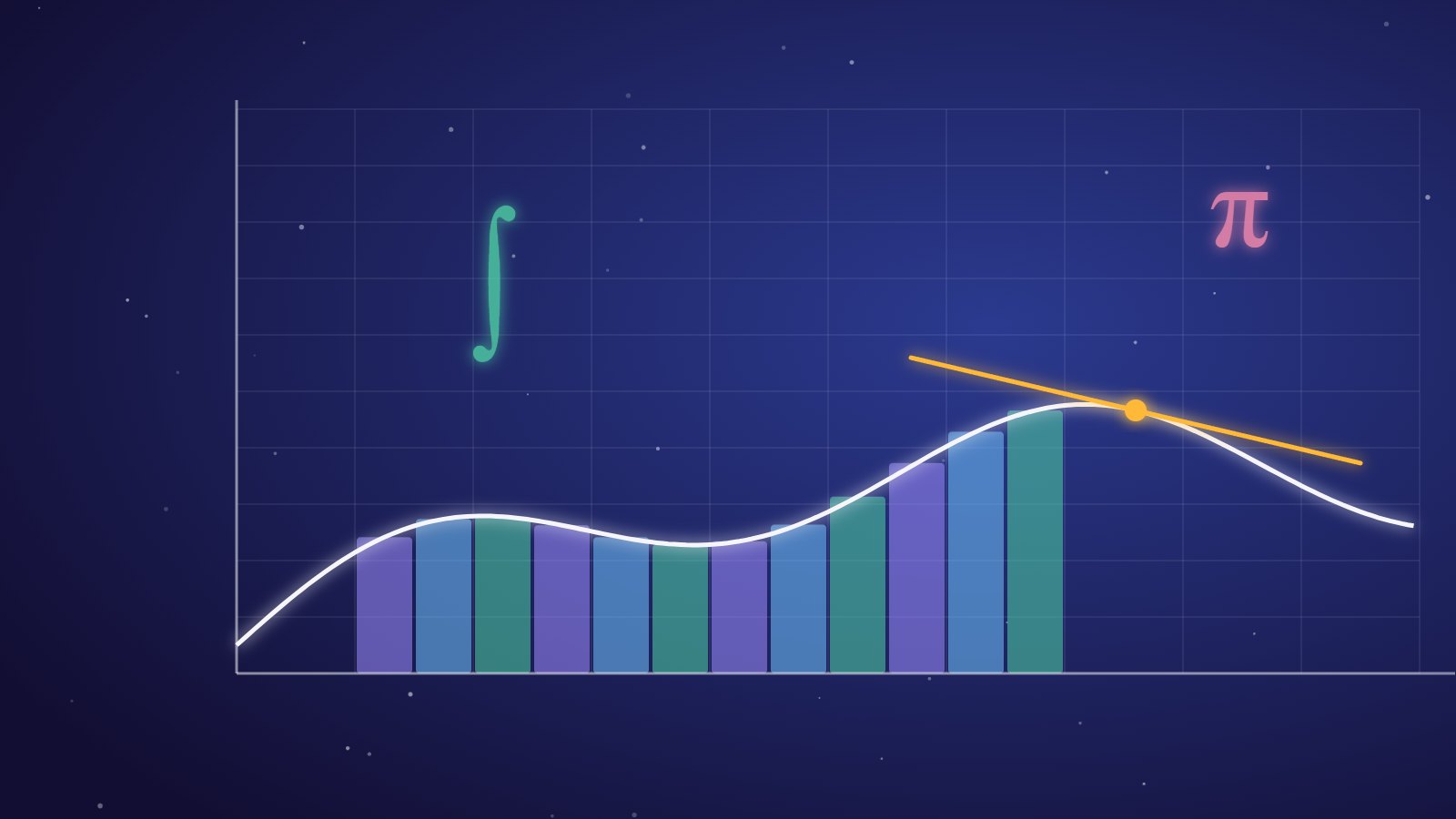
Interest on Interest A song about compound interest
Sing it back
Can you finish the lyrics?
Eight quick questions on “Interest on Interest”. No music, just your memory. Then share your score and challenge a friend.
Compound interest in one paragraph
Compound interest is interest calculated on both your original money (the principal) and the interest it has already earned, so the balance grows faster each period. The formula A = P(1 + r/n)^(nt) gives the final amount, where P is the principal, r is the yearly interest rate as a decimal, n is how many times a year interest is compounded and t is the number of years. For example, $1,000 at 10% a year for 3 years grows to $1,300 with simple interest but to $1,331 compounded annually. The rule of 72 estimates doubling time: divide 72 by the yearly rate, so at 8% money roughly doubles in about 9 years. The same effect works against you on debt, such as an unpaid credit card balance.
Key facts from the song
- Compound interest is interest on the principal plus interest on the interest already earned.
- Simple interest is paid only on the original principal, so it grows by the same amount every year.
- A = P(1 + r/n)^(nt): principal P, yearly rate r, n compounding periods per year, t years.
- At the same yearly rate, compounding more often (monthly or daily instead of yearly) gives a slightly larger total.
- The rule of 72 is an approximation: 72 divided by the yearly percentage rate is roughly the number of years for money to double.
Where it fits in your course
Lyrics
Verse 1
Simple interest pays you only on the money you put in
Compound pays on interest too, so the snowball starts to spin
A thousand at ten percent for three years, simple gets thirteen hundred flat
Compound it every year, you’ve got thirteen thirty-one, imagine that
Chorus
Interest on interest, watch your money learn to grow
Compound interest builds upon itself, it starts off slow
Rule of seventy-two, divide it by the rate and you will find
The years it takes to double, roughly: eight percent, about nine
Verse 2
A is P times one plus r over n, to the power n t
P’s the principal, r’s the rate, t’s the years, n’s how frequently
But on a credit card that very same math is working against you
Carry a balance month to month, the interest on it compounds too
Chorus
Interest on interest, watch your money learn to grow
Compound interest builds upon itself, it starts off slow
Rule of seventy-two, divide it by the rate and you will find
The years it takes to double, roughly: eight percent, about nine
Outro
Compound monthly, compound daily, and it adds a little more
Start it early, give it time, that’s what compound interest is for
Compound interest flashcards
Say the answer out loud, then tap the card to check it. Or test yourself quick-fire.
1What is compound interest?
Interest earned on the principal plus the interest already added, so the balance grows faster over time.
2What does $1,000 at 10% a year become after 3 years, simple vs compounded annually?
$1,300 with simple interest; $1,331 compounded annually.
3In A = P(1 + r/n)^(nt), what do n and t stand for?
n is the number of times interest is compounded per year; t is the number of years.
4Using the rule of 72, roughly how long does money take to double at 8% a year?
About 9 years (72 ÷ 8 = 9).
Questions about compound interest
Still wondering about something? Ask us and we’ll reply within two working days.
What is the difference between simple and compound interest?
Simple interest is paid only on the original amount, while compound interest is also paid on interest already added. $1,000 at 10% for 3 years gives $1,300 with simple interest and $1,331 compounded annually.
What is the compound interest formula?
A = P(1 + r/n)^(nt), where A is the final amount, P is the principal, r is the yearly rate as a decimal, n is the number of times interest is compounded each year and t is the number of years.
What is the rule of 72?
A quick estimate of how long money takes to double with compound interest: divide 72 by the yearly interest rate in percent. At 8% a year, money doubles in roughly 9 years. It is an approximation that works best for rates of roughly 6% to 10%.
How does compound interest affect credit card debt?
If you carry a balance, interest is charged on the balance, and unpaid interest is added to it, so next time you pay interest on that interest too. That is why an unpaid card balance can grow quickly.